Ashwagandha and piperine
Ashwagandha and Piperine in Quietum Plus: Safety and Evidence
Ashwagandha and piperine are tile 6 of the 18 Quietum Plus ingredients, which the sales page calls "Strong adaptogens". Ashwagandha has small trials for stress and sleep, plus liver injury and thyroid cautions. Piperine, a black pepper extract, raised the blood levels of two medicines in a small study. Neither has a tinnitus trial, and no amounts are printed.
Written by the Quietum Plus label deskUpdated
01Tile 6
What are ashwagandha and piperine doing in Quietum Plus?
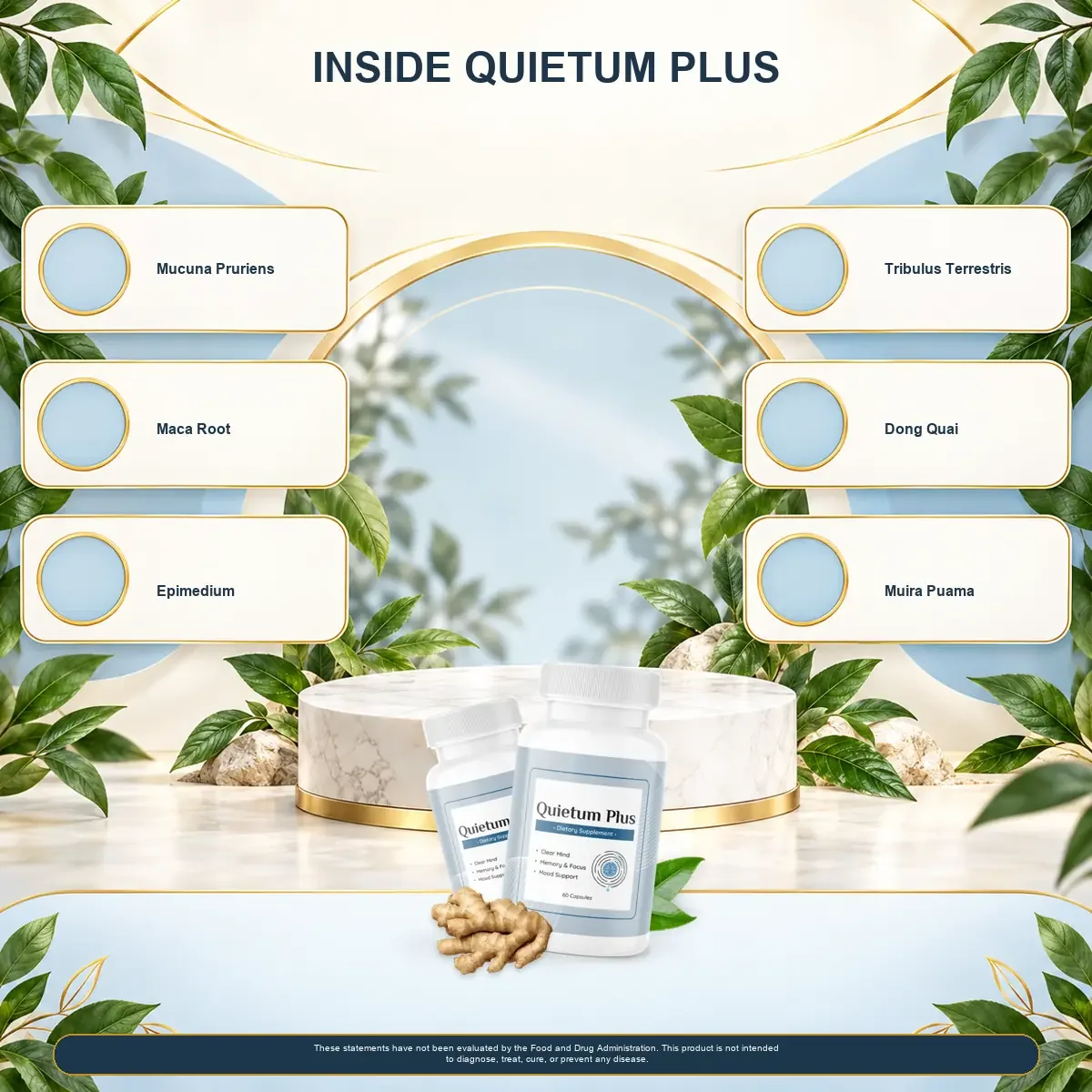
Ashwagandha and piperine are two of the 18 Quietum Plus ingredients, shown together on tile 6 of the sales page, which carries the line "Strong adaptogens" (Quietum Plus sales page). The page gives no reason for the pairing and no amount for either one.
Ashwagandha is the root of Withania somnifera, an Ayurvedic herb sold for stress. Piperine is the pungent compound in black pepper. It is often added to supplements to raise absorption, but the page does not say that is its job here.
The profile tables below show what the sales page and public sources say about each one.
| Name on the sales page | Ashwagandha |
|---|---|
| What it is | Withania somnifera root, an Ayurvedic herb |
| Sales-page tile | Tile 6: “Strong adaptogens” |
| Group (ours) | Adaptogen pair |
| Amount in a capsule | Not printed |
| Usually sold or studied for | Small trials for stress and sleep; the sales page calls tile 6 "Strong adaptogens" |
| Research on hearing or tinnitus | No hearing or tinnitus trials found |
| Main caution | Liver injury case reports; can change thyroid levels; avoid in pregnancy; may add to sedatives, diabetes and blood pressure medicines. |
| Name on the sales page | Piperine |
|---|---|
| What it is | Black pepper extract (Piper nigrum) |
| Sales-page tile | Tile 6: “Strong adaptogens” |
| Group (ours) | Adaptogen pair |
| Amount in a capsule | Not printed |
| Usually sold or studied for | Added to raise absorption of other ingredients |
| Research on hearing or tinnitus | Not a hearing ingredient |
| Main caution | Raised blood levels of propranolol and theophylline in a small study; ask your pharmacist about your medicines. |
02Stress and sleep
What does ashwagandha do?
Ashwagandha has small trials showing lower stress and anxiety scores, and it may help sleep. The results are mixed, and none of them looked at hearing.
The NIH fact sheet describes a review of 7 studies in 491 adults in India, lasting 6 to 8 weeks, that found lower stress scores. A later trial of 120 adults found no drop in perceived stress against placebo (NIH ODS, Ashwagandha).
The NCCIH says some preparations may work for insomnia and stress, while evidence on anxiety is unclear. It calls short-term use, up to 3 months, possibly safe. Long-term safety has not been established. Drowsiness, stomach upset and diarrhea are the common side effects (NCCIH, Ashwagandha).
03Liver
Has ashwagandha been linked to liver injury?
Yes, ashwagandha has been linked to liver injury in case reports. The NIH fact sheet counts five cases at 450 to 1,350 mg a day (NIH ODS, Ashwagandha), and the NCCIH notes a number of cases tied to supplements (NCCIH, Ashwagandha).
LiverTox rates ashwagandha as a likely cause of clinically apparent liver injury. Symptoms usually start 2 to 12 weeks after starting, with jaundice and itching. In the cases described, the jaundice cleared completely, though it could last a long time (LiverTox, Ashwagandha).
Mislabeled or mixed supplements are always a possibility, and Quietum Plus mixes 18 ingredients with unknown amounts. That makes it hard to tell which one is to blame if a problem arises.
Yellow skin or eyes, dark urine, pale stools, severe itching or pain in the upper right belly after starting a supplement need a medical check the same day. Do not wait to see if it passes.
04Medicines
Can ashwagandha affect thyroid tests or other medicines?
Yes, ashwagandha can change thyroid levels and may add to other medicines. In a small trial it lowered TSH and raised T3 and T4, and three case reports describe thyrotoxicosis (NIH ODS, Ashwagandha).
The NCCIH advises against use before surgery and for people with thyroid or autoimmune disorders. It advises against use in pregnancy and while breastfeeding (NCCIH, Ashwagandha). Ask your doctor about any of the types below.
| Medicine type | Why ask |
|---|---|
| Thyroid hormone | Ashwagandha may raise thyroid hormone levels. |
| Diabetes and blood pressure medicines | It may add to their effect. |
| Sedatives and anti-seizure drugs | It may add to drowsiness. |
| Immunosuppressants | It may act on the immune system. |
The same lists appear on our supplements and medicines guide.
Quietum Plus: from $49 a bottle60 capsules a bottle · 2, 3 or 6 bottles · 60-day money-back guarantee
See packs05Absorption
What does piperine do to absorption?
Piperine can raise how much of a medicine reaches the blood. In a 1991 crossover study of six healthy people, 20 mg of piperine a day for 7 days raised the blood levels of propranolol and theophylline (Bano et al., Piperine and Propranolol).
That study was very small and did not cover other drugs, so it shows a possibility, not a rule. With a heart rhythm, asthma or seizure medicine, ask your pharmacist before taking any product that contains piperine.
Because no amount of piperine is printed, no one can say how strong the effect would be in a capsule.
06Hearing
Does ashwagandha help tinnitus?
No trial shows that ashwagandha helps tinnitus. We found none for either ingredient, and the NIDCD says no supplement sold for tinnitus has been shown to work (NIDCD, Tinnitus).
The US guideline update advises clinicians not to recommend dietary supplements for persistent, bothersome tinnitus (AAO-HNSF Tinnitus Update 2026). If ringing is new, one-sided or pulsing, or came with a sudden change in hearing, get an exam first.
When ringing is a doctor question, not a supplement question
Sudden hearing loss in one ear (same day), ringing that beats with your pulse, ringing after a head injury, or ringing with dizziness, weakness or a drooping face. Call 911 for sudden weakness or a drooping face. Sources: NIDCD on sudden deafness (NIDCD, Sudden Deafness), the NHS (NHS, Tinnitus), Mayo Clinic (Mayo Clinic, Tinnitus) and the tinnitus guideline (AAO-HNSF Tinnitus Guideline 2014).
Keep taking your prescribed medicine, and do not change it because of a supplement.
07Keep reading
Which Quietum Plus ingredient pages come next?
Eight more pages cover the rest of the 18 ingredients, one for each sales-page tile. See the full ingredients page and the side effects page for the main caution on each.
08FAQ
Ashwagandha and piperine questions, short answers
What does ashwagandha do?
Ashwagandha is an Ayurvedic root studied for stress, anxiety and sleep. Small trials show lower stress scores, though one 12-week trial of 120 adults found no drop against placebo (NIH ODS, Ashwagandha). It has not been tested for hearing or tinnitus.
Has ashwagandha been linked to liver injury?
Yes. LiverTox rates it a likely cause of liver injury, usually showing 2 to 12 weeks after starting, with jaundice and itching (LiverTox, Ashwagandha). See a doctor the same day for yellow skin or eyes, dark urine or severe itching.
Can ashwagandha affect thyroid tests or thyroid medicine?
Yes. In a small trial ashwagandha lowered TSH and raised T3 and T4, and thyrotoxicosis cases were reported (NIH ODS, Ashwagandha). If you have a thyroid condition or take thyroid hormone, ask your doctor before using any product that lists it.
What does piperine do to absorption?
Piperine can raise how much of some medicines reach the blood. A small 1991 study found higher propranolol and theophylline levels with piperine (Bano et al., Piperine and Propranolol). Ask your pharmacist about your medicines before taking a product with it.
Does ashwagandha help tinnitus?
No trial shows that it does. The NIDCD says supplements sold for tinnitus have not been shown to work (NIDCD, Tinnitus), and guidelines advise against recommending them (AAO-HNSF Tinnitus Update 2026). Get new or one-sided ringing examined.
Can ashwagandha make you sleepy?
Yes, it can. Drowsiness is a listed side effect, and it may add to sedatives (NCCIH, Ashwagandha). Take care with driving until you know how it affects you, and ask first if you take a sleep or anxiety medicine.
09Who wrote this
Written and reviewed by
Pages built from the bottle images, the sales page and linked NIH, NIDCD, FDA, FTC and peer-reviewed sources.
Last updated . Read our editorial standards and how we check reviews. This website is run by Goquietumplus, a USA Authorized Quietum Plus Retailer, not by the manufacturer. We earn money when you buy through our order links.
Keep reading
More about Quietum Plus

USA Authorized Quietum Plus Retailer
Ready to try Quietum Plus?
Read the label, check your medicines with your doctor, then pick a pack. Bigger packs cost less per bottle, and the 60-day guarantee covers every pack.
- Secure BuyGoods checkout
- 60-day money-back guarantee
- Ships from the U.S.